How to Use a Cold Frame in Winter
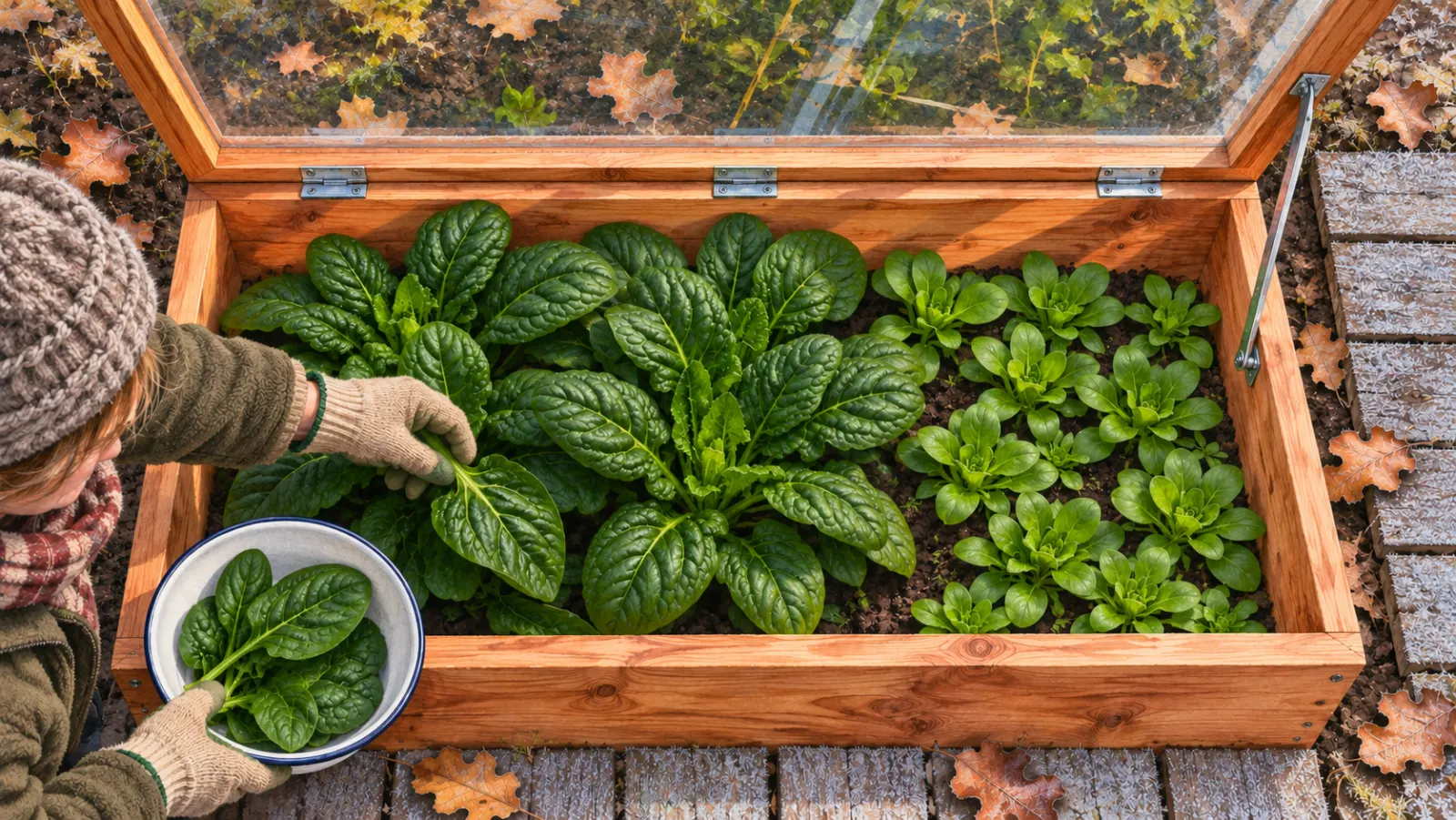
Put a cold frame over greens that have already reached picking size. For spinach or corn salad, put a thermometer at leaf height and open the lid when the air warms toward 60°F (16°C). Shut it again before sunset. Treat the bed as a supply of leaves grown before the short days: winter picking usually runs ahead of new growth.
A cold frame is a low, bottomless box with a clear lid. Sun warms the soil through the lid, the soil releases some of that warmth after dark, and the sides shelter the plants from wind. On a bright morning the box can warm quickly even while there’s ice on the path.
When to open, close or cover the frame
| What you see | What to do |
|---|---|
| Sunny, inside nearing 60°F (16°C) | Prop lid; widen if needed |
| Cloudy, leaves damp, air above freezing | Crack lid during the mildest spell |
| Light fading, frost expected | Close and latch the lid |
| Night approaching 28°F (−2°C) inside | Cover lettuce; harvest before deeper cold |
| Night approaching 20°F (−7°C) inside | Add insulation; harvest available spinach |
| Frozen spinach at breakfast | Wait for the leaves to thaw |
| Below about 10 hours of daylight | Pick lightly from established plants |
Check the frame every day, including cloudy days. Keep a shaded minimum–maximum thermometer beside the leaves, to measure the air around the crop. A sensor on the glazing can warm in direct sun while the plants are cooler. If you’re deciding whether to sow, use a separate probe in the soil. Air can be warm enough to vent while the seedbed is still too cold for the crop you want.
For established winter greens, vent before the air exceeds 60°F (16°C). Start opening as it approaches that mark. The warmer figures you’ll encounter describe active growth or general overheating limits:
| Use | Published temperature | Your action |
|---|---|---|
| Winter greens | Below 60°F (16°C) | Vent before reaching this |
| Growing cool-season seedlings | 60–65°F (16–18°C) air | Use when raising transplants |
| Active cool-season crop growth | 50–80°F (10–27°C) air | Don’t use as winter vent trigger |
| General cold-frame opening guidance | 85°F (29°C) | Open winter greens much earlier |
| General overheating ceiling | Below 90°F (32°C) | Don’t wait for this ceiling |
A small box gains heat quickly in sunshine; winter greens need protection from cold without a hot afternoon under glass. Use the winter target to operate the lid. For sowing, the 60–65°F (16–18°C) soil range is a growing-condition reference, not a temperature an unheated frame will maintain through winter.
Use a captive prop or a stay that can’t slip, and latch the hinged lid against gusts. If you’re usually home, a secure manual prop is the simplest choice. If you’re away during daylight, use a gas- or wax-cylinder opener matched to the lid’s weight, and check its actual opening temperature with your thermometer. It needs to respond at the winter target, not merely at a general greenhouse setting.
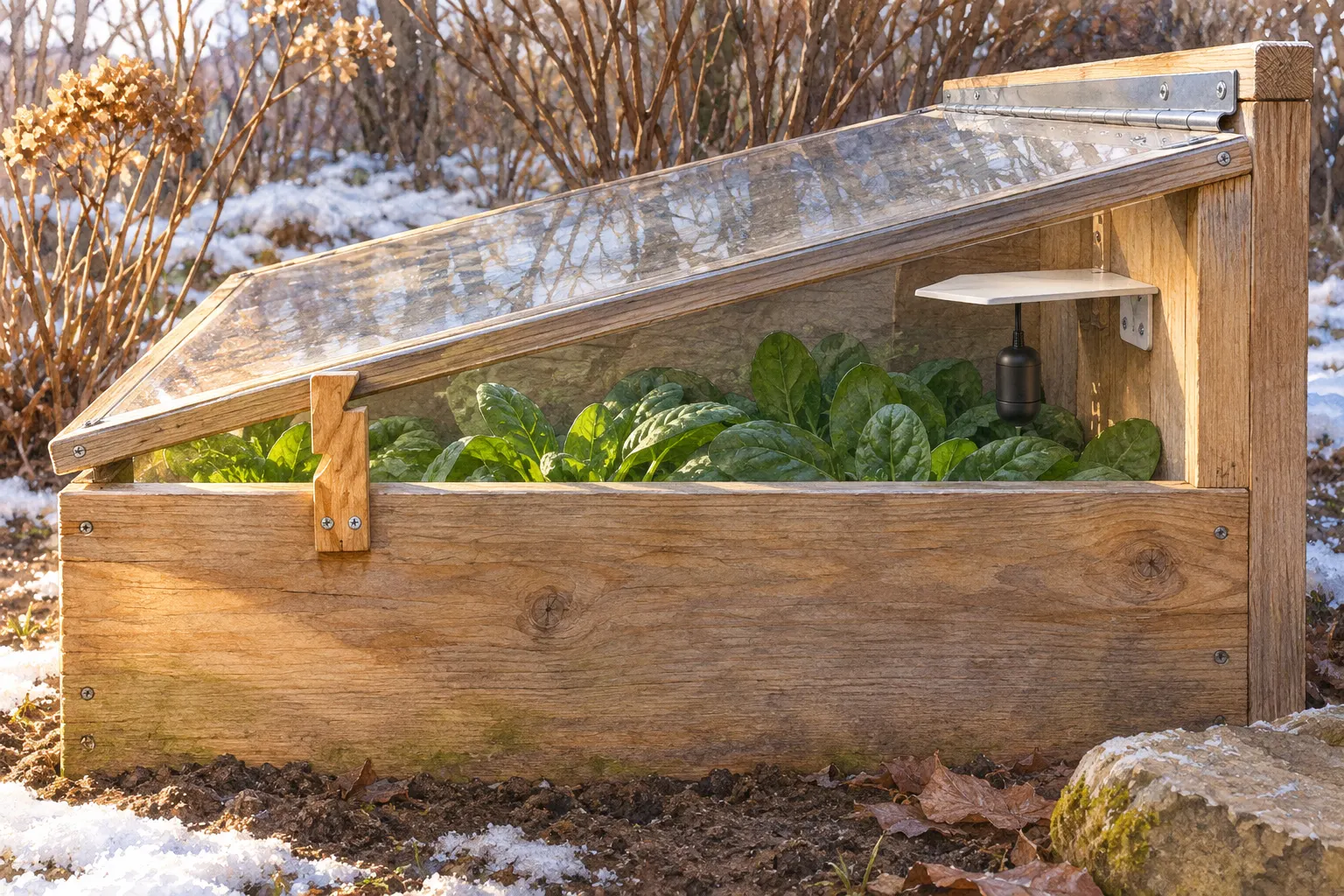
A sunny day above 45°F (7°C) outdoors is a reminder to look. Some growers open sooner: Niki Jabbour uses 40°F (4°C) outdoors as her opening cue. The air around your leaves is the reading that makes the call. Sun can drive the inside past the vent point before the outdoor thermometer reaches that mark. Say the outdoor air is 43°F (6°C) and the shaded thermometer among the plants reads 63°F (17°C). Open the lid about 2 in (5 cm) now and recheck. If the reading is still climbing, give it more air.
Set up a frame you can reach and vent
Put the frame over a bed that drains well and gets direct winter sun. A south-facing slope in the lid helps catch low light. Shelter the north side with a fence or wall that doesn’t shade the lid, and choose a spot near a water source where you can easily reach the lid each day. If the sunniest patch floods after rain, set the frame over the drier bed.
For a frame you reach from one side, keep it no more than about 3 ft (0.9 m) deep. A front about 12 in (30 cm) high and a back about 18 in (46 cm) high give low greens room and put the glazing on a slope. Leave extra headroom if you plan to add fleece on hoops inside. Let the size of your available lid determine the length. If you’re building over a wide raised bed, split the cover into hinged sections you can open and hold safely, or leave access from both sides.
For winter greens, choose solid timber sides and a hinged clear lid. Wood or brick sides protect better from cold than clear sides. Budget choices are sound reclaimed timber with an intact window sash, storm window or manageable glazed panel. Rigid clear plastic or fiberglass is another option. Avoid a heavy panel that makes daily opening a chore.
At the midrange, a timber frame with a rigid twin-wall polycarbonate lid is our practical pick for easy handling. For a permanent, premium setup, spend on a durable frame and reliable adjustable hardware; masonry is another option. Plastic lumber, blocks or straw bales can also form the sides. Match the footprint to the usable glazing before buying materials. The extra money should buy easier venting and a longer-lived structure.
Use a handle, hinges and a positive latch. A loose sheet of glass balanced on bricks is awkward in wind. If an old glazed sash is too heavy or the pane is cracked, use a lighter intact panel. Avoid timber treated with creosote or similar preservatives in an enclosed frame. White paint on an untreated interior reflects light. Black absorbs and reradiates heat; choose white when making the most of winter light is the priority. If you dismantle the frame every spring, use removable pins or hooks at the corners. Peg lightweight kits down.
Choose a low tunnel with hoops and a fabric cover if you need to protect a long row cheaply. A rigid frame is easier to open to pick a small bed. A tall mini greenhouse suits upright plants, but lower shelves can sit in shade and the cover may be harder to vent in small increments. A hotbed adds a heat source; this routine is for an unheated frame.
Plant for the light you’ll have at harvest
Start with spinach for the main winter crop and corn salad (mâche or lamb’s lettuce) for variety. Both can be grown under winter protection, and established spinach is a better bet than lettuce where hard freezes are common. Tatsoi and mizuna broaden the salad bowl. In a mild winter, use part of the frame for lettuce or radishes; in a continental winter, reserve most of the space for established hardy greens.
Look up when daylight falls below about 10 hours at your latitude. Plan to have the leaves nearly at picking size by then. Count backward using the packet’s days to harvest, the period over which you want to pick, and another 10–14 days for slower fall growth. For fall establishment while the weather is still warm, leave the lid off; start closing it overnight as frost approaches. If you start lettuce under lights, try hardening and transplanting when the seedlings are three to four weeks old and can be handled.
For full-size spinach leaves, sow ½–¾ in (1.3–1.9 cm) deep and thin to 6–8 in (15–20 cm) between plants. If you want dense baby greens instead, use your packet’s baby-leaf spacing and harvest them small. Use the packet for corn salad, lettuce and Asian greens rather than giving them spinach’s spacing.
In a mild maritime garden, from coastal British Columbia to Ireland and Atlantic Europe, cool soil and winter rain often matter more than a string of hard freezes. Use the frame to protect a mix of greens. In warmer southern US or Mediterranean gardens, mild spells allow more growth but make daytime venting especially important. Inland, where days stay below freezing or snow covers the lid for long spells, plan for a winter supply of established spinach and corn salad. If the days are already short and the bed is empty, start cool-season transplants under lights for setting out when daylight returns, or sow spinach in late fall for an early spring crop. A warmer box can’t replace light in December.
For a sense of the seasonal shift, Iowa’s example has uncovered crops sown in late August or early September, harvest continuing into November, and spring sowing moved two to four weeks earlier than the usual early-April start. Your daylight and frost dates determine your calendar. In spring, gradually open the frame to harden off tomatoes, peppers or summer annuals such as marigolds and petunias before frost-free planting; move tender trays back into warm shelter on cold nights.
Water and pick on mild days
Feel the soil under the surface before you water. If it’s still damp, leave it alone. If it’s dry, water the roots early in the day and let the foliage dry before the lid goes down. Check more often during a run of bright or windy days. An enclosed box gets less rain, but leaf growth and water use are slow in deep winter. Wet foliage that stays wet into the evening is a good reason to use the next mild daylight spell to air the frame.
Brush off snow gently once you can do it without forcing a frozen lid. Clear glazing lets the plants use the daylight that’s available. Leave carrots, beets or turnips under cover in the bed and lift them when the soil thaws. If you pick greens in the shortest days, take some outer leaves and keep the center of the plant. Wait until frozen leaves have thawed before picking them. A bright morning may make that possible by late morning; don’t force the harvest while the leaves are stiff.
When a closed lid won’t be enough
A closed frame can raise the air temperature by 5–10°F (3–6°C) or more in cool spring or fall weather. For winter nights, plan from your recorded overnight minimums. Use the outdoor forecast low if you have no record yet.
The crop changes the decision. Lettuce tolerates light freezes of 28–32°F (−2–0°C). Cold-acclimated spinach can withstand some freezing down to 14–20°F (−10–−7°C). Acclimation and the length of the cold spell matter: surviving a freeze doesn’t mean every leaf stays salad-ready.
Use these precautionary action points: as the expected frame minimum approaches 28°F (−2°C), cover lettuce; before deeper cold, pick the usable leaves while thawed. As it approaches 20°F (−7°C), add night insulation and harvest available spinach rather than relying on the bottom end of its survival range. A forecast of 24°F (−4°C) with no overnight records therefore calls for harvesting vulnerable lettuce before dark. Keep established spinach under the closed lid with the extra protection below. During a prolonged deep freeze, the frame becomes a place to hold plants for recovery, not a reliable supply of fresh leaves.
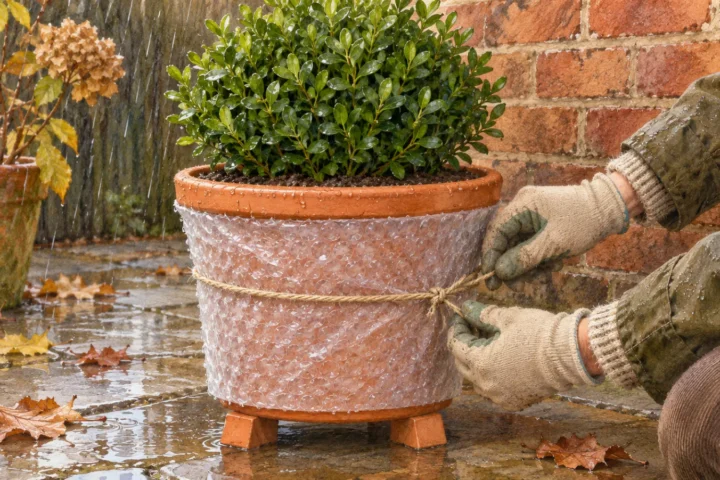
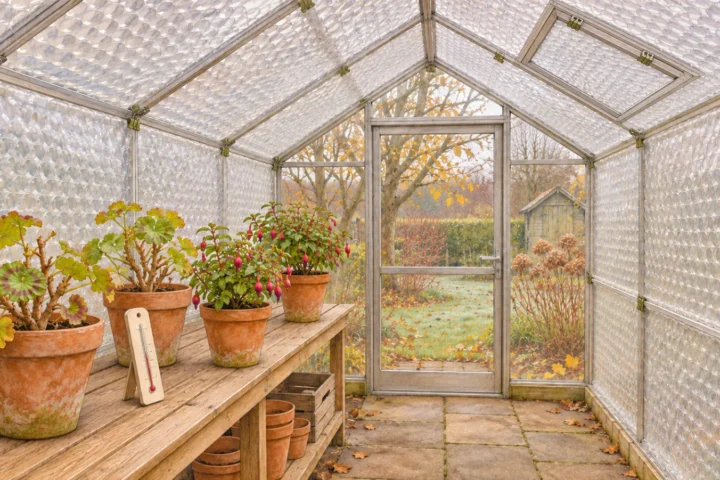
On a cold night, put frost cloth (horticultural fleece) over small hoops inside the frame so it stays off the leaves. An opaque mat on top can slow heat loss overnight; secure it against wind. Remove it when daylight returns, and sweep loose straw off the glazing if you used that instead. Weatherstrip obvious gaps where the lid sits and bank soil or straw bales against solid walls if the edges cool too quickly. Leave the hinge and the vent free. Keep the glazing clean. Permanent bubble lining reduces light and ventilation, so choose removable night insulation first.
If even the covered box can’t hold the temperature your plant needs, use a different shelter. It’s a poor place for a tender potted plant that needs a bright, frost-free winter. For the greens, reset the thermometer at closing time. Read the overnight minimum before you open the lid in the morning, and write it beside the outdoor low. Use the two readings to decide if you need a second layer the next time the forecast looks similar.